Mobile Catamaran Fiberglass & Gelcoat Repair Specialist
Charleston • Hilton Head • Beaufort • Savannah
Since 2019, the catamaran community has been one of the most rewarding parts of what we do at Total Boat Repair. Power cat and sail cat owners share the same values we built our company around—family, discovery, and a deep appreciation for the vessels that make that life possible. Over the years, that shared passion has allowed our mobile team to become the Southeast’s leading specialists in catamaran fiberglass repair, gelcoat color matching, keel damage repair, and professional detailing.
From South of Savannah to North of Charleston, we’ve completed structural and cosmetic repairs on hundreds of multi-hulls. Whether you own a cruising sail cat or a performance power cat, we have deep hands-on experience with the unique hull geometry and manufacturing methods of today’s top brands—including Lagoon, Leopard, Fountaine Pajot, Aquila, Balance, World Cat, and Twin Vee. We understand the specific stresses these boats endure, meaning we know exactly what your vessel needs to maintain its structural integrity and resale value.
You don’t need the hassle of moving a wide-beam boat for service. Whether your catamaran is hauled out for the winter at Cooper River Boatyard, Thunderbolt Marine, or Safe Harbor Savannah Yacht Center, or sitting in a slip anywhere from Charleston and Beaufort to Hilton Head, Bluffton, and Savannah, Total Boat Repair’s mobile team comes directly to you. We are the premier mobile catamaran fiberglass and gelcoat repair specialists in the Lowcountry, delivering honest evaluations and exceptional results right to your dock or yard.
Mobile Catamaran Fiberglass Repair
Catamarans experience different stresses than monohulls their wide beam, twin hull construction, bridge deck loads, and unique structural design can create damage patterns that require specialized repair techniques.
Fiberglass is the structural backbone of your vessel. When fiberglass damage is not repaired properly, moisture intrusion, delamination, and further structural deterioration can occur over time. You want a professional to evaluate and do your repair.
Our mobile fiberglass repair catamaran services include:
Hull Crack Repair
We repair:
- Impact cracks
- Stress cracks
- Spider cracks
- Collision damage
- Hull fractures
- Bridge deck cracking
- Grounding damage
- Swim Platform damage
Every repair begins with identifying the full extent of damage rather than simply filling the visible crack. We have received certified training from West Systems Epoxy Training Facility in Michigan amongst other training courses in fiberglass repair. We have repaired hundreds of gelcoat and fiberglass repairs on catamarans over the years.
An Example Of A Mobile Fiberglass Repair in Charleston SC
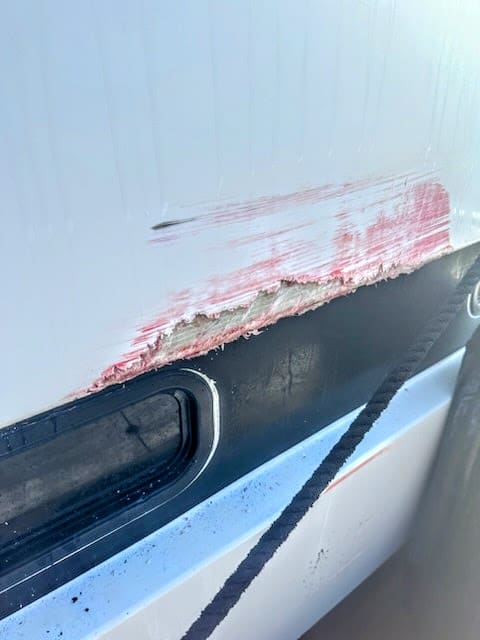
This picture above represents a catamaran that struck a buoy in Charleston Harbor. This is before our fiberglass repair.
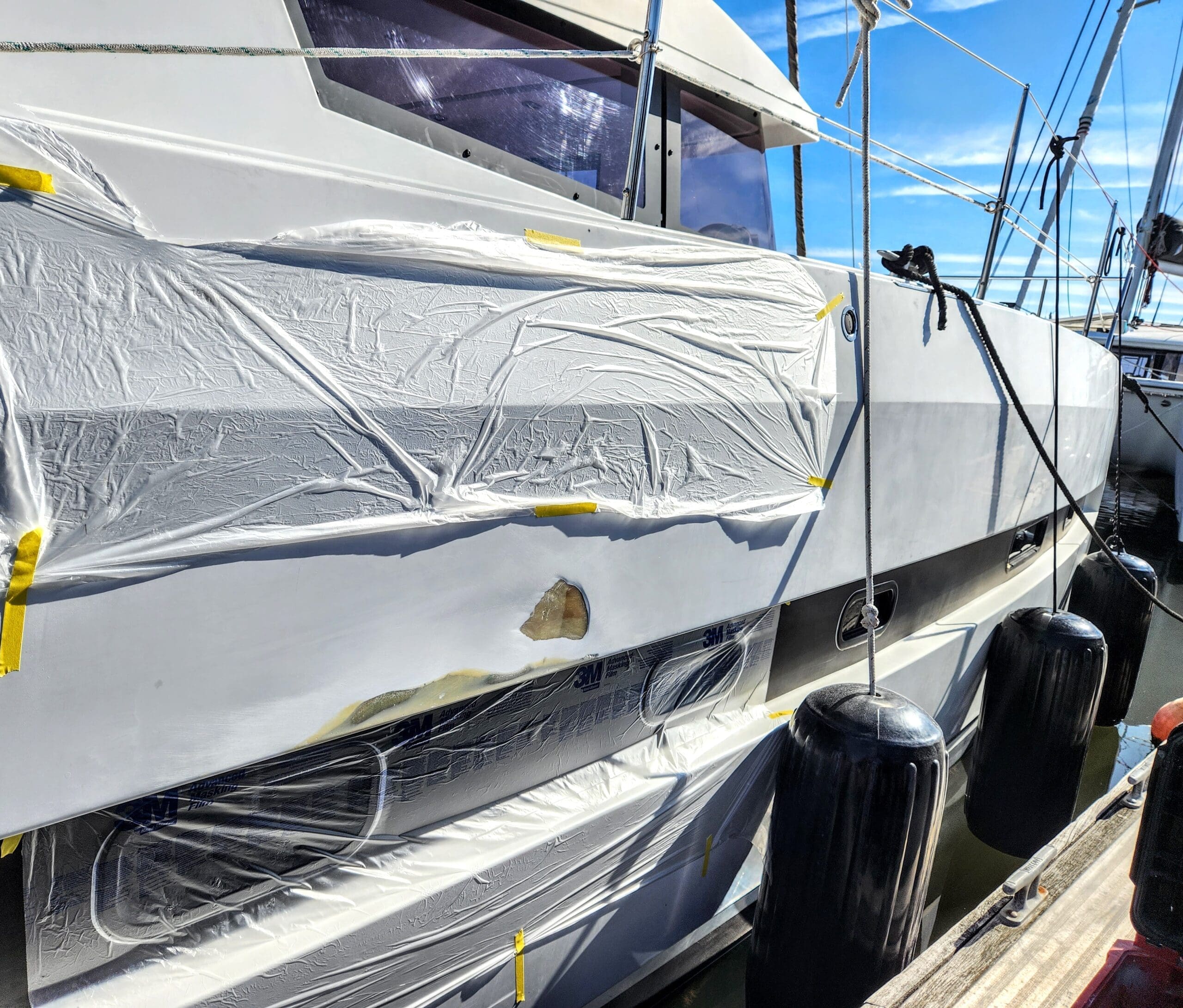
This picture above is the same catamaran during our mobile fiberglass repair that was completed dockside at Safe Harbor Charleston City Marina.
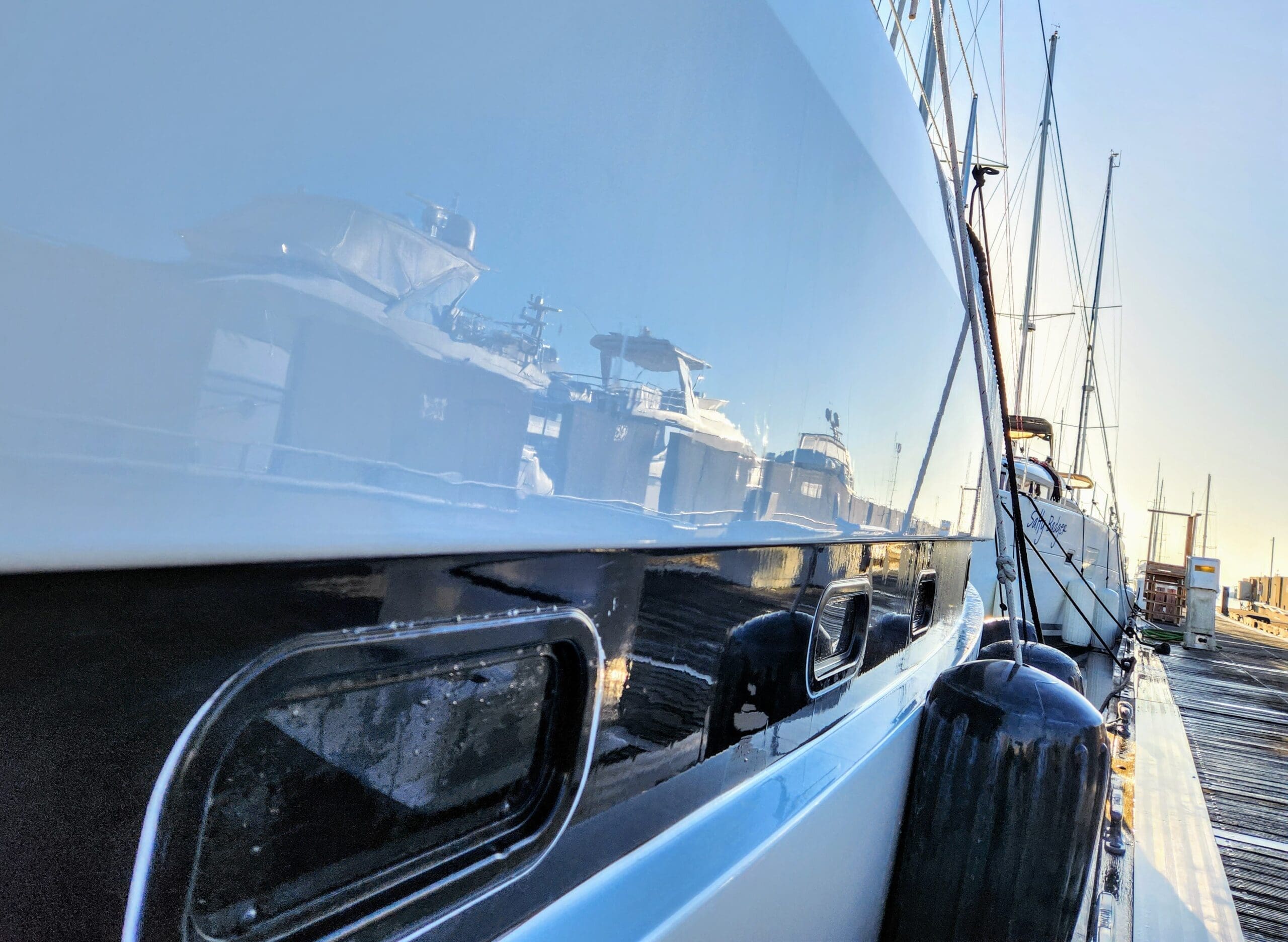
This picture above shows the same catamaran exactly where the impact damage had occurred but this is after our mobile fiberglass repair was completed and the hull was restored to a factory finish.
Structural Fiberglass Repair
Our team performs:
- Laminate reconstruction
- Core repairs
- Reinforcement repairs
- Structural rebuilds
- Grounding damage repairs
Structural repairs require restoring the original strength and integrity of the laminate, not merely improving appearance. Once the integrity of the hull is rebuilt, then we focus on matching the gelcoat to the original color and contour through our fairing process.
Delaminated Hull Repair
Delamination can occur when fiberglass layers separate from one another or from the core material.
Common symptoms include:
- Soft spots
- Flexing
- Hollow sounding areas
- Surface cracking
Early diagnosis can prevent significantly larger repairs later. Many seemingly minor cracks or chips can indicate damage extending deeper into the laminate beneath the surface. Grounding incidents in particular frequently create hidden damage around keel attachments, hull laminates, bulkheads, and surrounding structural components.
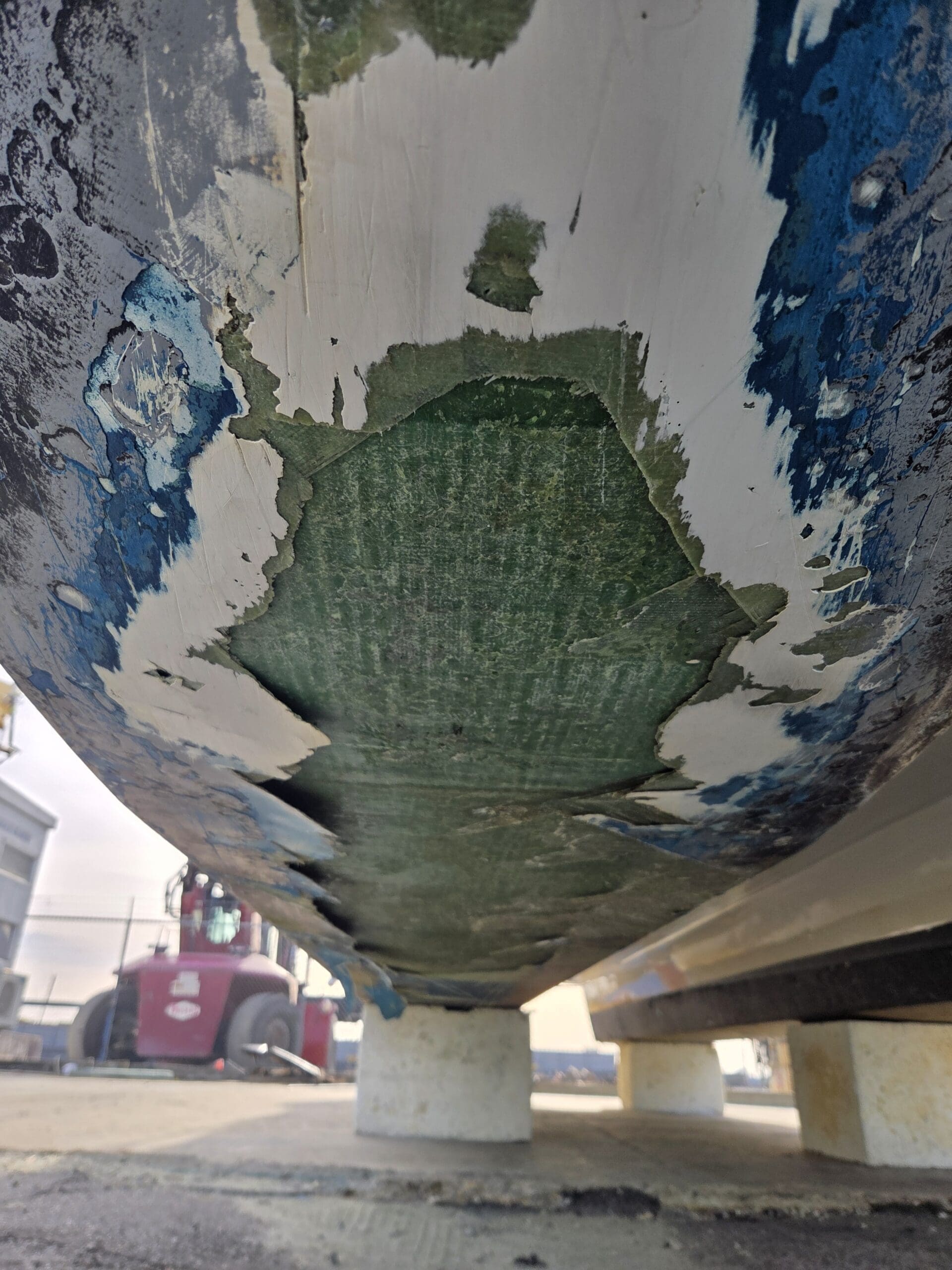
This picture above shows a catamaran that suffered significant fiberglass delamination while underway in Charleston SC.
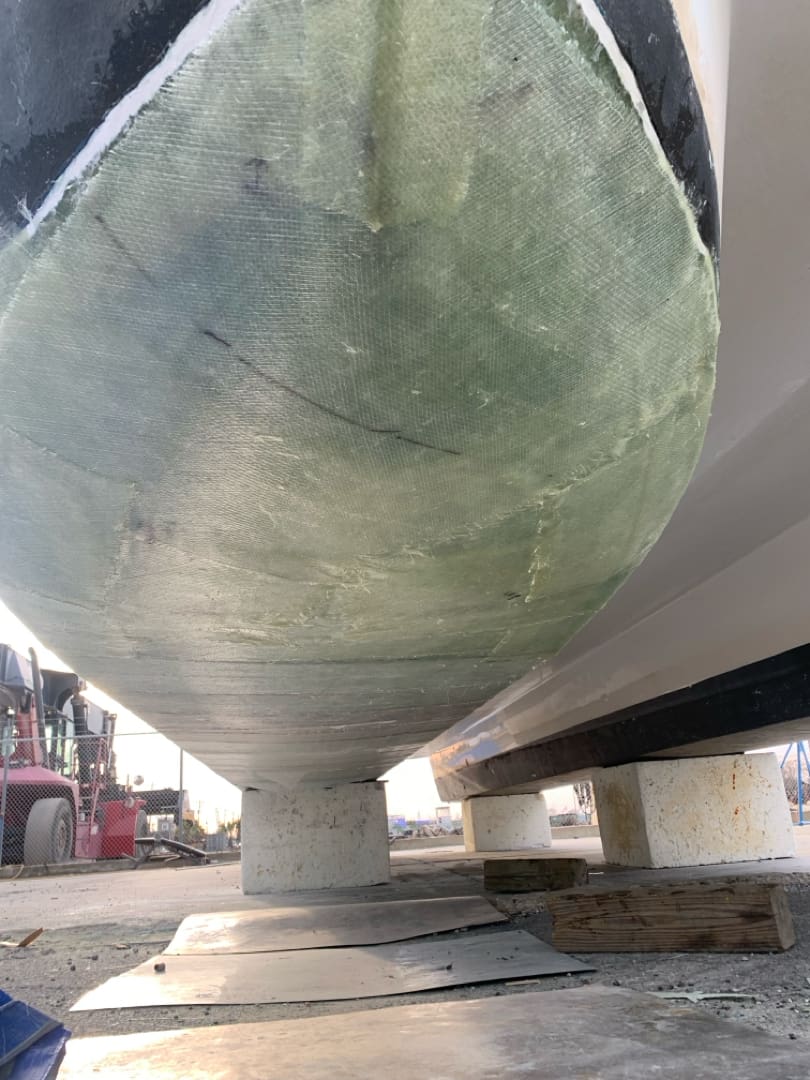
This picture above shows the same catamaran after our initial fiberglass repair was completed using an epoxy resin and before any fairing or bottom paint had been applied.
Catamaran Insurance Claim Repairs
Grounding incidents, dock strikes, swim platform damage, storm damage, submerged object impacts and collision damage are frequently covered by marine insurance policies.
Our team regularly assists owners by documenting damage, providing repair estimates, photographing repairs and communicating with adjusters throughout the repair process. We perform numerous insurance claims repairs annually and are well versed in assisting the cat owner through the process and providing clarity and outstanding repairs that they can have confidence in.
Keel Damage & Grounding Repair
Grounding incidents are among the most common causes of sailboat and catamaran hull damage that we see and deal with in Charleston and Hilton Head. While many catamarans have break away keels or sacrificial keels that are designed to withstand a grounding incident, it is best to get them repaired as soon as possible. One of the main reasons being is that the longer the vessel sits in the water, the more the moisture is going to wet the core which usually only a 2 pound density foam and all this does is delay your repair or simultaneously increase your cost as that wet core has to be removed and replaced.
The underlying issue with keel damage is how the forces transmitted through the vessel can affect other parts of the vessel and increase the time and cost of repairs as it can effect:
- The hull laminates
- Structural grids
- Bulkheads
- Keel structures
- Hull-to-keel joints
We routinely repair the following on Catamarans that visit our boatyards from Charleston to Savananah:
Keel Damage
- Keel cracks
- Keel gouges
- Exposed fiberglass
- Grounding damage
- Other companies or DIY failed repairs
Grounding Damage
- Impact fractures
- Hull cracking
- Structural stress damage
- Fiberglass reconstruction
It’s important to be aware that grounding forces often create damage beyond what is immediately visible on the exterior surface. Proper inspection and diagnosis are critical before repairs begin.
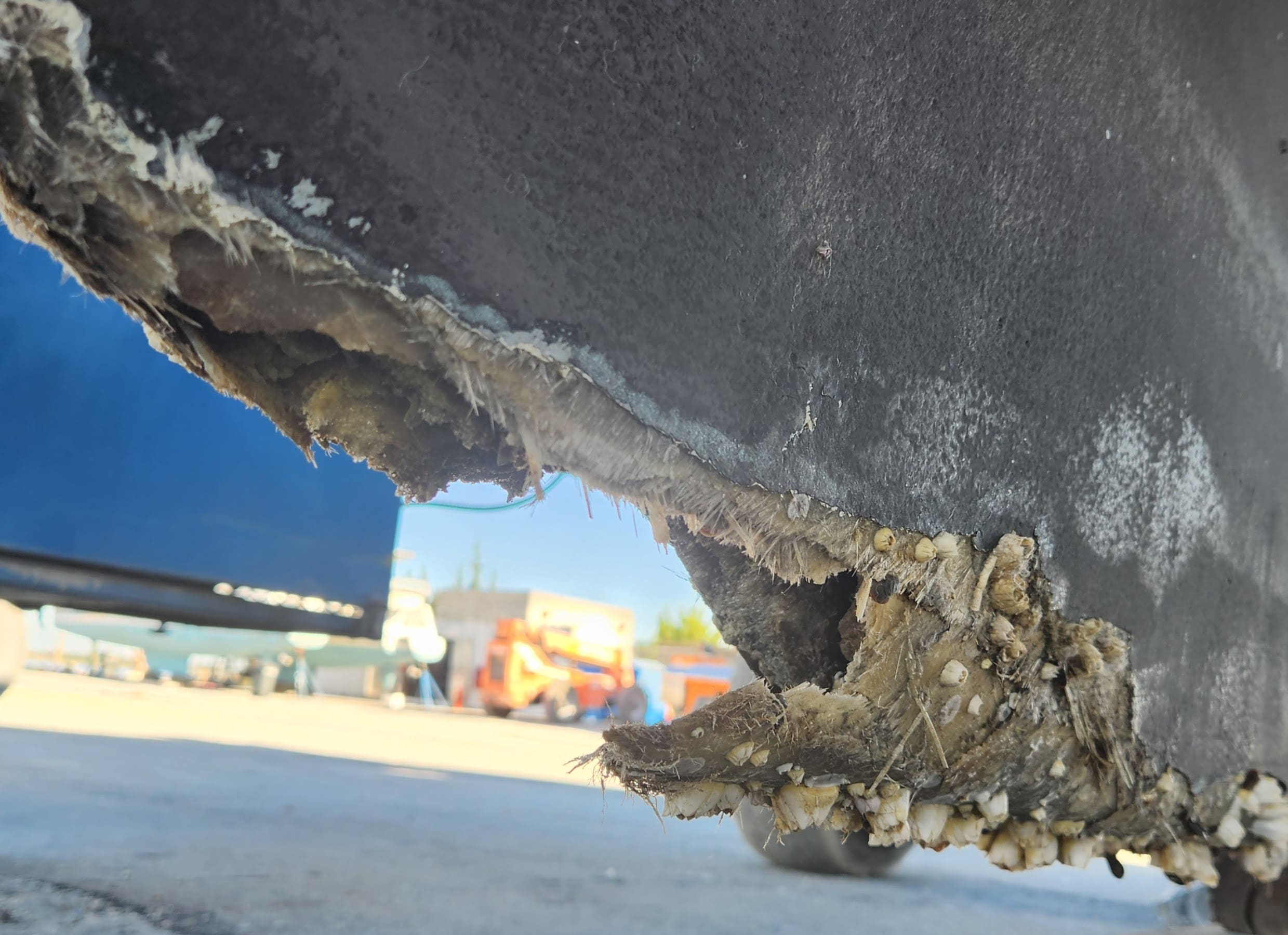
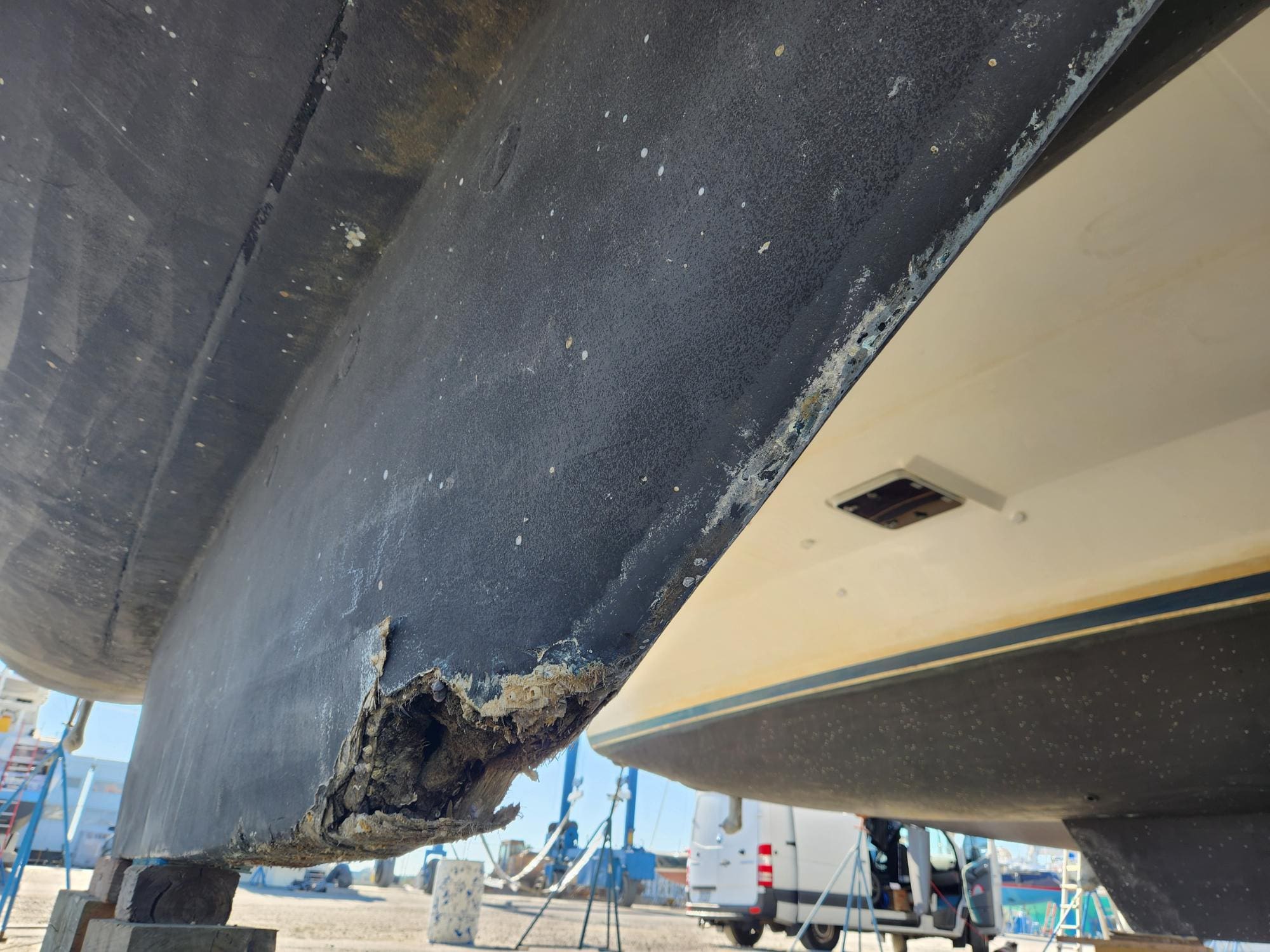
The above picture shows a catamaran that had run aground in the Caribbean and suffered major fiberglass damage. The owners sailed the vessel to us in Charleston SC where they trusted our fiberglass repair team to fix it properly.
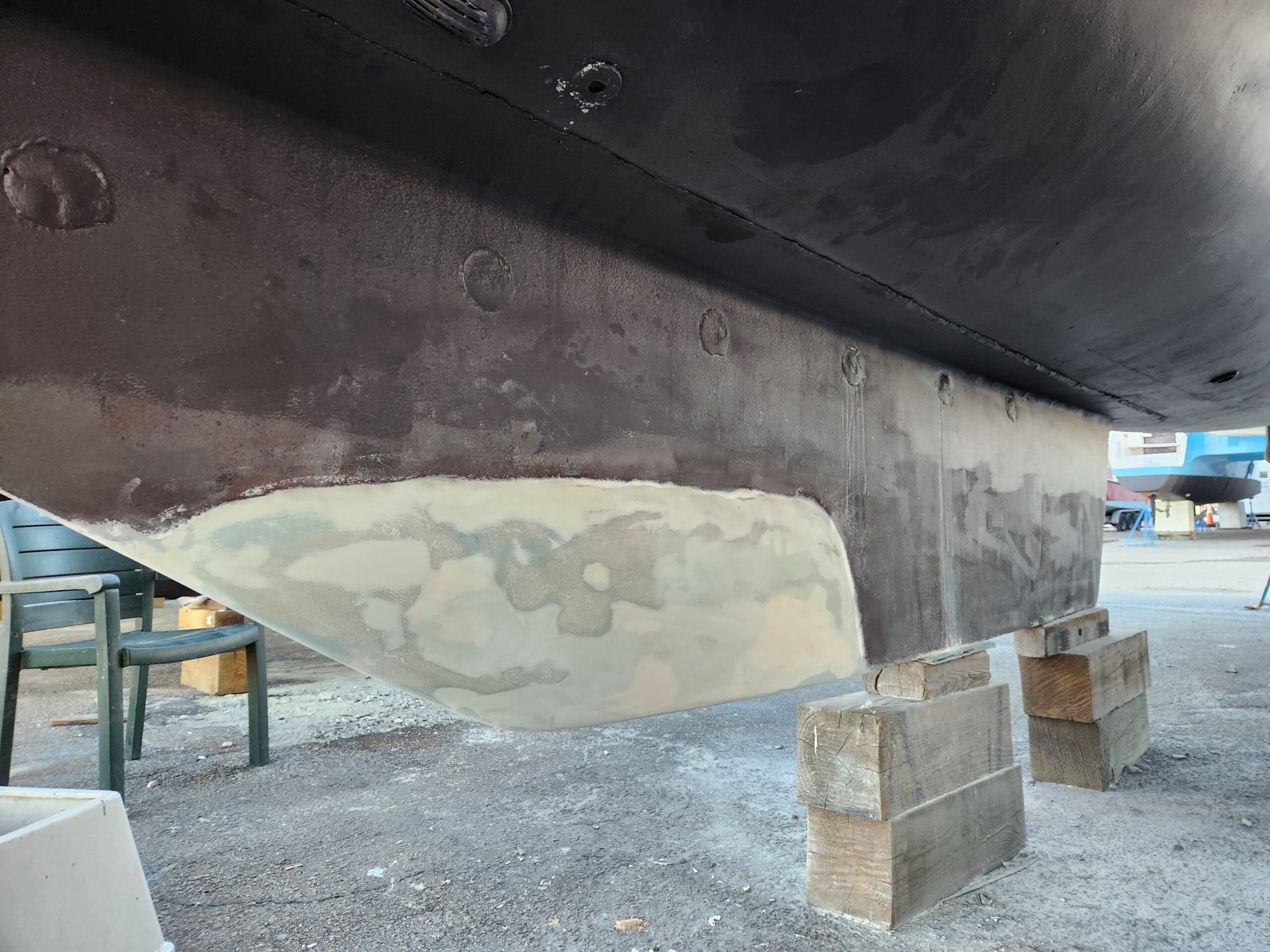
The above picture shows the same catamaran after the fiberglass repair was completed by our mobile team at Cooper River Boatyard in Charleston SC. This is before the barrier coat and bottom paint was applied.
Osmotic Blister Repair
Blisters form when moisture penetrates the laminate and creates pressure beneath the gelcoat surface.
Common symptoms include:
- Small blisters
- Clusters of blisters
- Fluid-filled bubbles
- Bottom coating failures
Our blister repair process may include:
- Moisture evaluation
- Removal of damaged material
- Surface preparation
- Laminate rebuilding
- Barrier coat application
- Bottom paint restoration
Mobile Catamaran Gelcoat Repair
Your gelcoat serves as the protective outer shell of your vessel. Similar components in gelcoat are also found in your polyester resin that many if not all catamarans are composed of. For the most part, your gelcoat is aesthetic. However, when damaged moisture can begin migrating into the laminate beneath which can lead to other more costly repairs. We repair any and all types of gelcoat problems.
We repair:
- Gelcoat cracks
- Spider cracks
- Stress cracks
- Swim platform damage
- Chips
- Gouges
- Dock rash
- Scratches
- Oxidation
- Faded finishes
Professional Color Matching
One of the most difficult aspects of quality gelcoat repair is achieving an invisible repair. Our color matching process is designed to blend repaired areas naturally into surrounding surfaces for a professional appearance. While we recommend that we use the same gelcoat as the manufacturer, many catamarans are built overseas and acquiring such can be either lengthy or problematic, so we are able to match most gelcoat colors to a near exact match. Age of the vessel, the maintenance of the gelcoat, UV damage, oxidation levels of the gelcoat are factors that play into how well we are able to match the gelcoat.
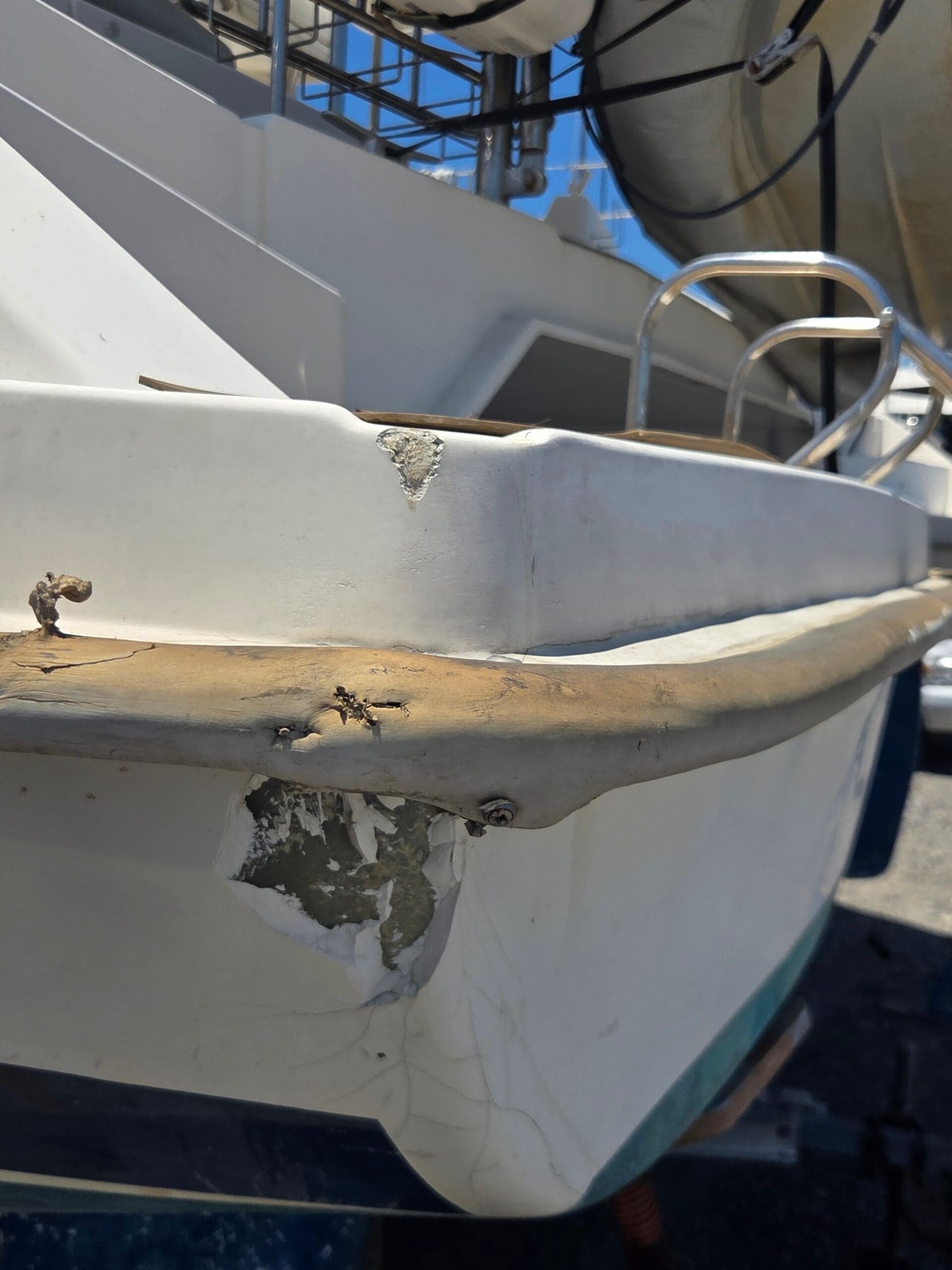
The above picture shows gelcoat damage to the swim platform of catamaran, we fix these frequently.
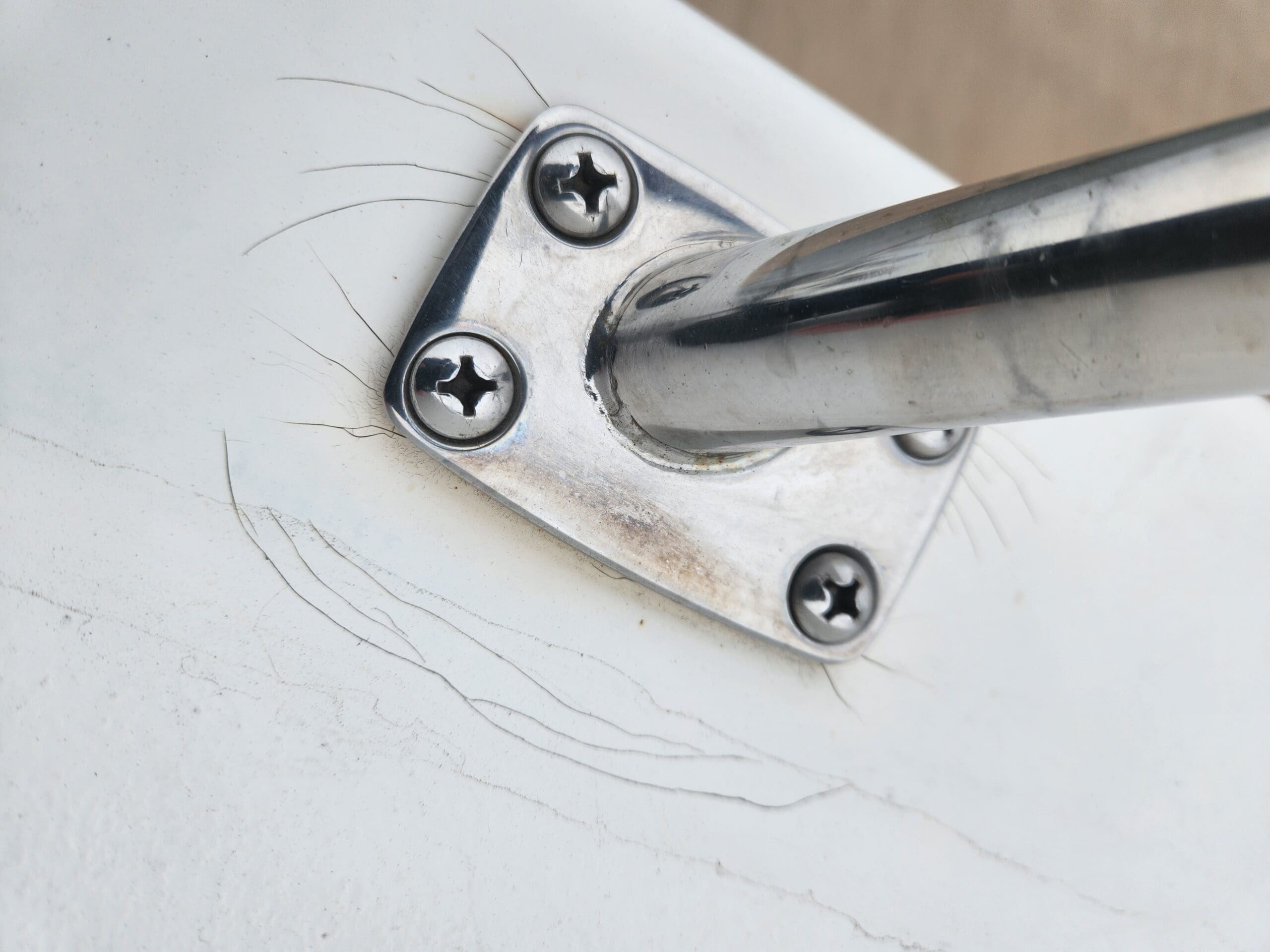
The above picture shows stress cracks around a stanchion from flexing or overtightened, we fix these.
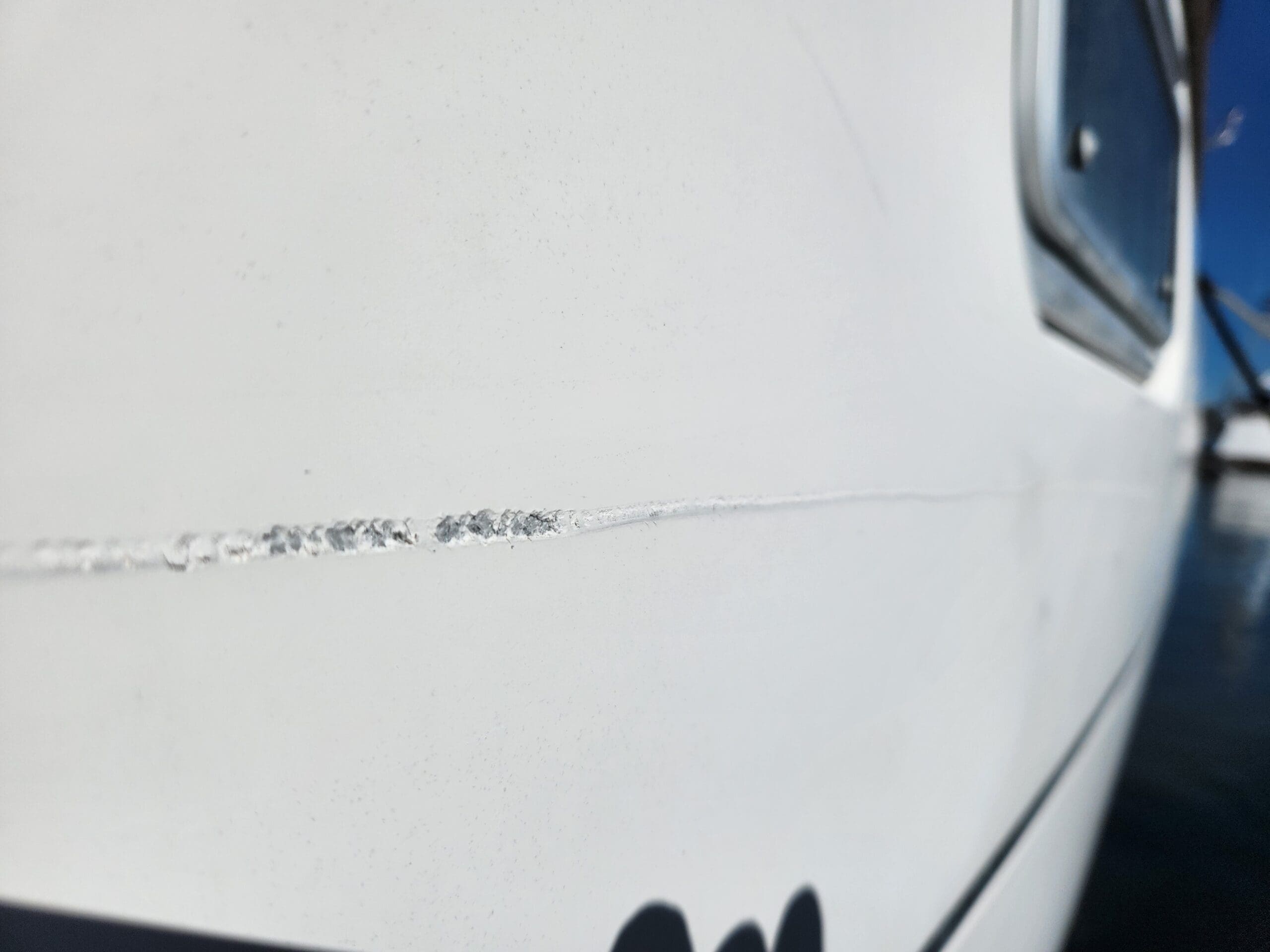
The above picture shows a deep gelcoat scrape on the hull of a catamaran that got side swiped by another vessel, we fix these.
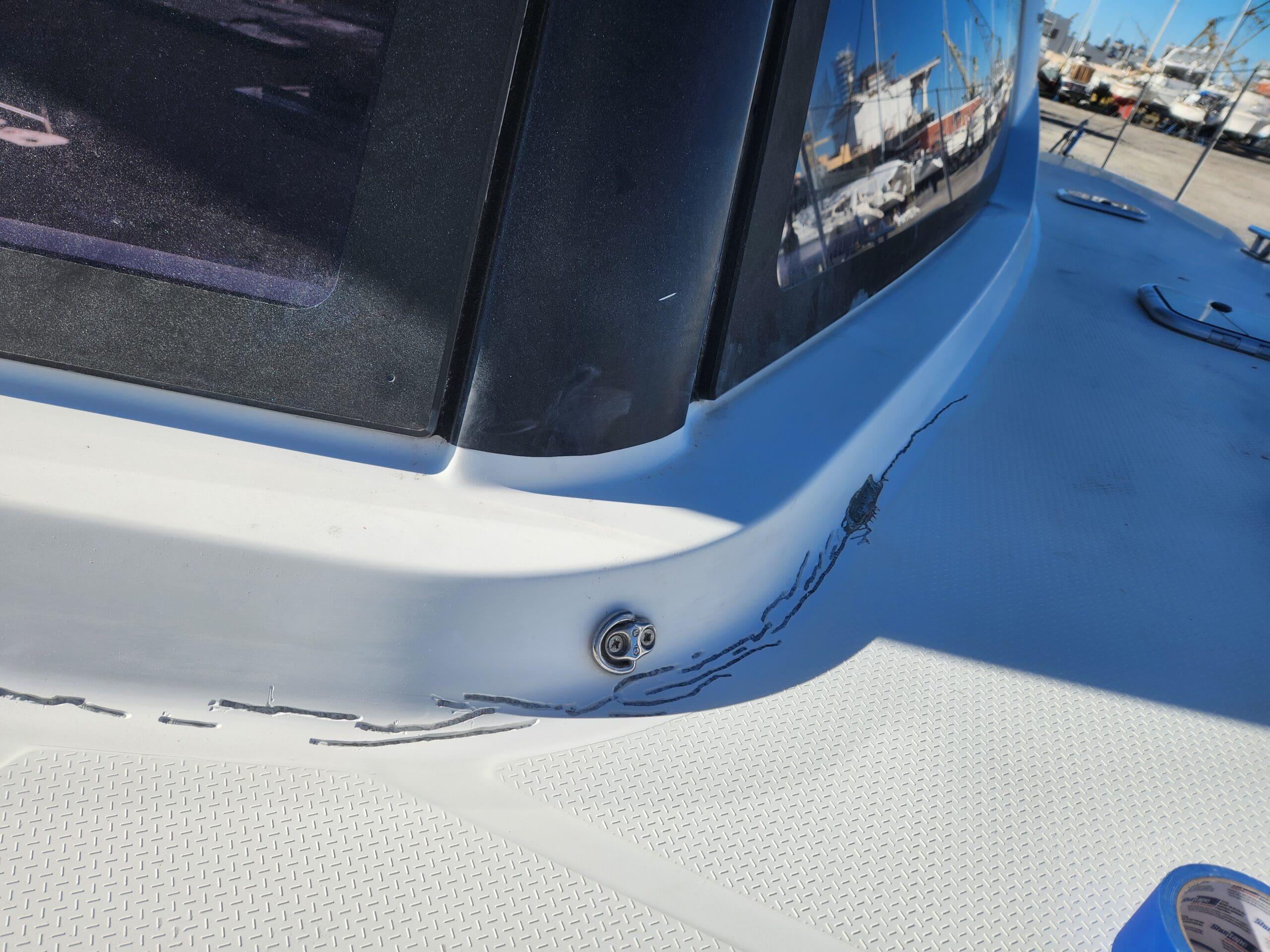
The above picture shows a multitude of hairline cracks mid repair, these cracks form from the filler aging that was used by the manufacturer in the build process, we fix these.
Mobile Boat Detailing & Restoration in Charleston SC
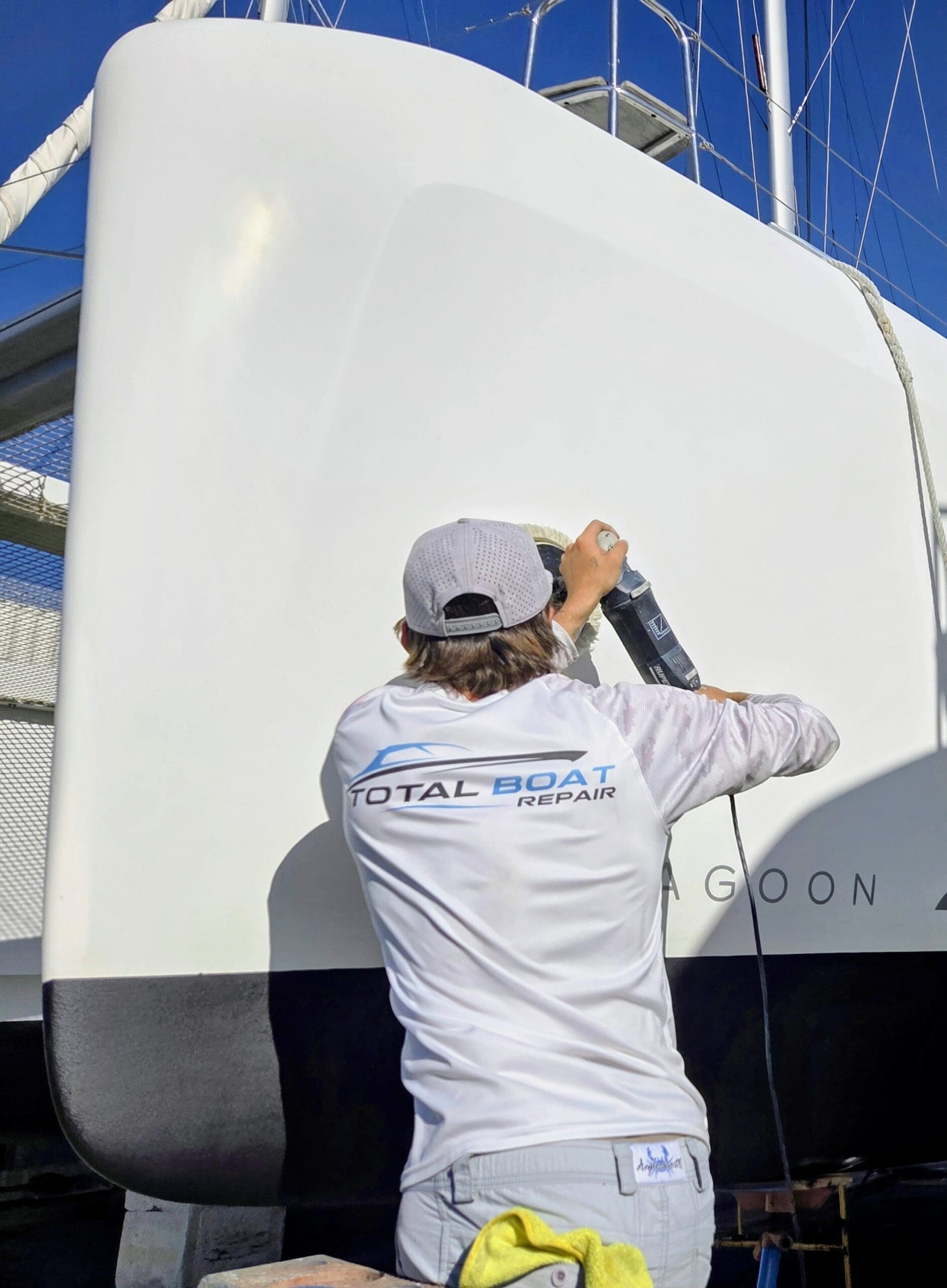
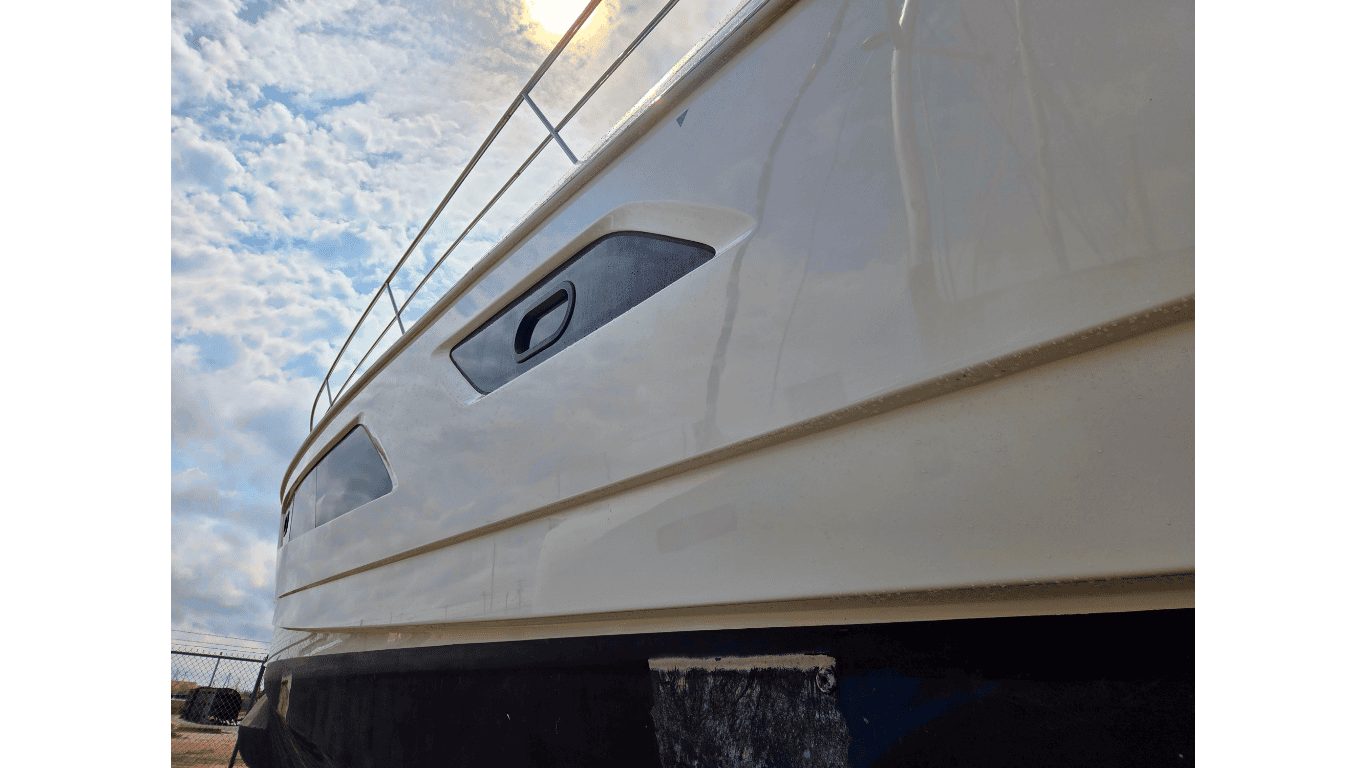
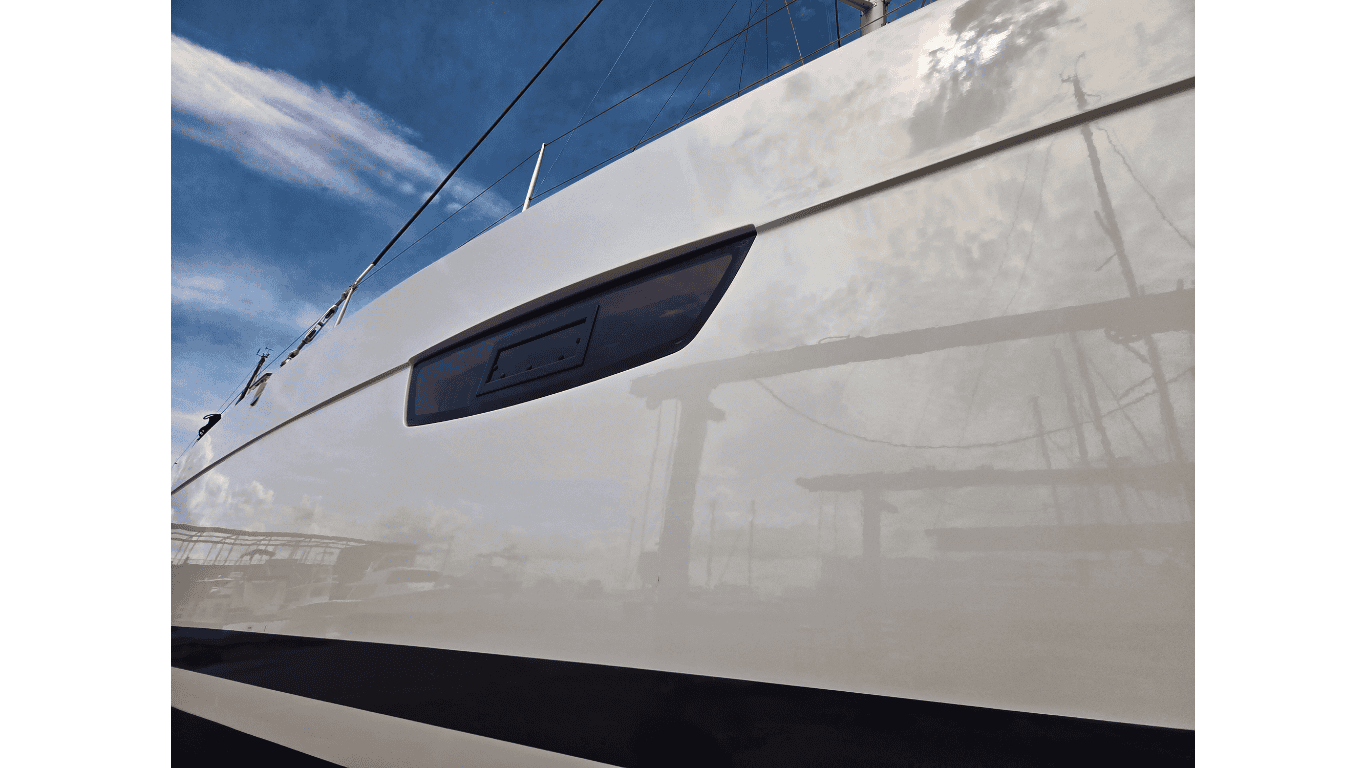
Catamarans have an unusually high amount of freeboard which leave the gelcoat exposed to harmful UV rays, heat, salt exposure and water stains. If not properly maintained through regular protection coatings of hiqh quality wax or Si02 ceramic sealants, the gelcoat will begin to oxidize at a much higher rate. The oxidation will not only create a dull and chalky appearance but it will make the surface much more susceptible to staining and discoloration. Lighter colored boat hulls are easier to maintain than darker colored hulls, so the cost to remove oxidation and restore shine goes up significantly based upon the color of the catamaran. If the oxidation is caught early enough, cat owners can get away with just compounding the oxidation from the surface. If the oxidation is “heavy”, then the sailing vessel hull may need to be sanded to remove the oxidation, followed by compounding and polish to restore it’s shine all of which incur a higher repair costs.
Our detailing and restoration services include:
- Wet Sanding
- Compounding
- Machine polishing
- Oxidation removal
- Hull Protection to slow oxidation
- Wax/Si02 Ceramic protection
- Non-skid wax
- Metal polishing
- Full vessel detailing
Whether your vessel needs a seasonal refresh or a complete restoration, our team can restore appearance and help maintain it’s resale value.
Catamaran Bottom Painting In Charleston
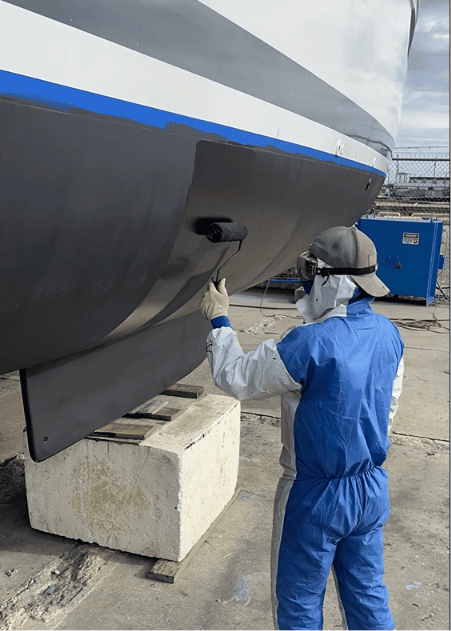
Do to the LOA, the beam, draft and balance that a catamaran hull requires there is significantly more surface area that needs protection. Maintaining the bottom paint on a catamaran hull helps in the following:
- Reduce marine growth
- Improve performance
- Improve fuel efficiency
- Protect hull surfaces
- Extend maintenance intervals
Our bottom paint services include:
Surface Preparation
- Existing coating evaluation
- Sanding
- Mechanical preparation
- Cleaning
Protective Coatings
- Barrier coats
- Ablative coatings
- Hard bottom paints
- Running gear coatings
Maintenance Programs
We provide annual and recurring bottom maintenance services for catamaran owners throughout the Lowcountry and Coastal Georgia.
Why Catamaran Owners Trust Total Boat Repair
We bring expertise with years of experience repairing and restoring both power catamarans and sailing catamarans and whether you are at a marina or in a boatyard, we bring the professional repair services directly to your vessel.
What Sets Us Apart
✓ Over 145 Google 5 star reviews
✓ Specialized fiberglass experience
✓ Professional factory-quality gelcoat finishes
✓ Both structural and cosmetic repair capability
✓ Years of experience assisting cat owners with insurance claim repairs
✓ Detailed repair documentation
✓ Service throughout Charleston, Hilton Head, Bluffton, Beaufort, and Savannah
✓ One of the highest-rated marine repair companies in the region
Areas Our Mobile Team Services
We Repair Catamaran Hulls In These Charleston SC Boatyards and Marinas
- Cooper River Boatyard
- Safe Harbor Wando Boatyard
- Safe Harbor City Marina
- Charleston Harbor Resort and Marina
- Seabreeze Marina
- Cooper River Marina
- Safe Harbor Bristol Marina
- St Johns Yacht Harbor
- Bohicket Marina
- Ross Marine
- Charleston City Municipal Marina
We Repair Catamaran Hulls At These Hilton Head Island Marinas
- Shelter Cove Harbour & Marina
- Harbour Town Yacht Basin
- South Beach Marina
- Safe Harbor Skull Creek Marina
- Windmill Harbour Marina
- Broad Creek Marina
We Repair Catamaran Hulls At These Savannah Marinas and Boatyards
- Thunderbolt Marina & Boatyard
- Safe Harbor Savannah Yacht Center
- IGY Marina Savannah
- Savannah Marina
- TPG Isle of Hope Marina
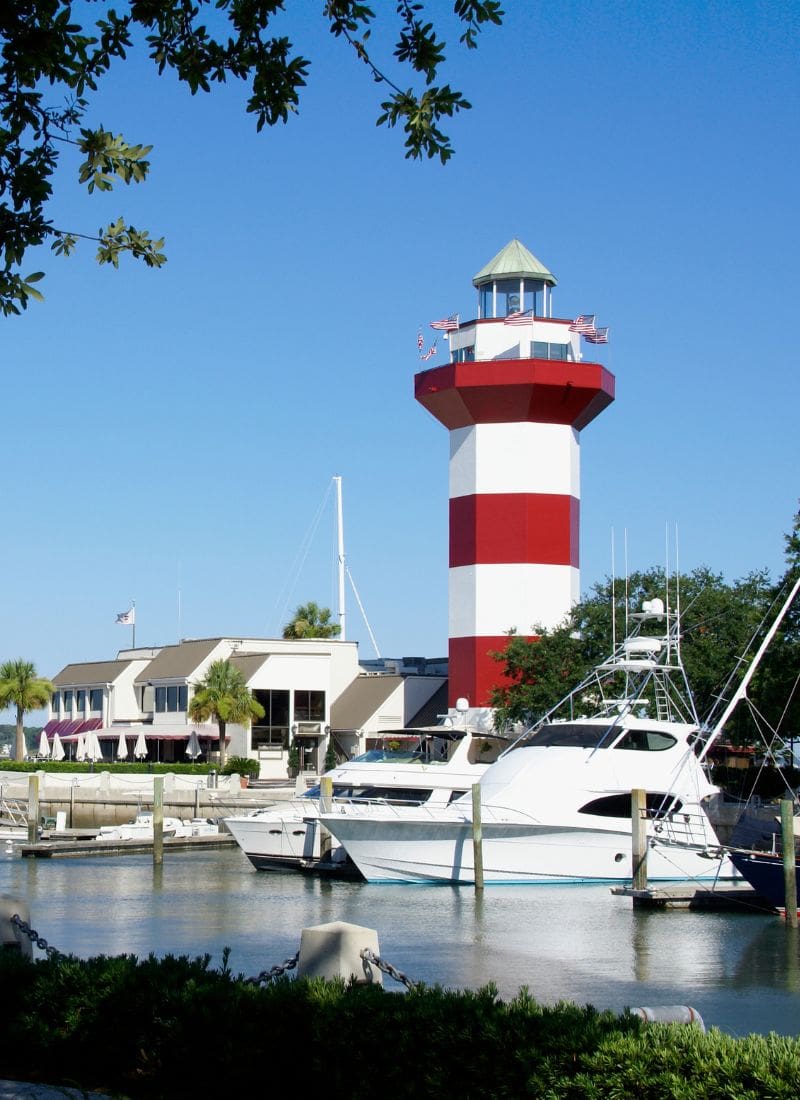
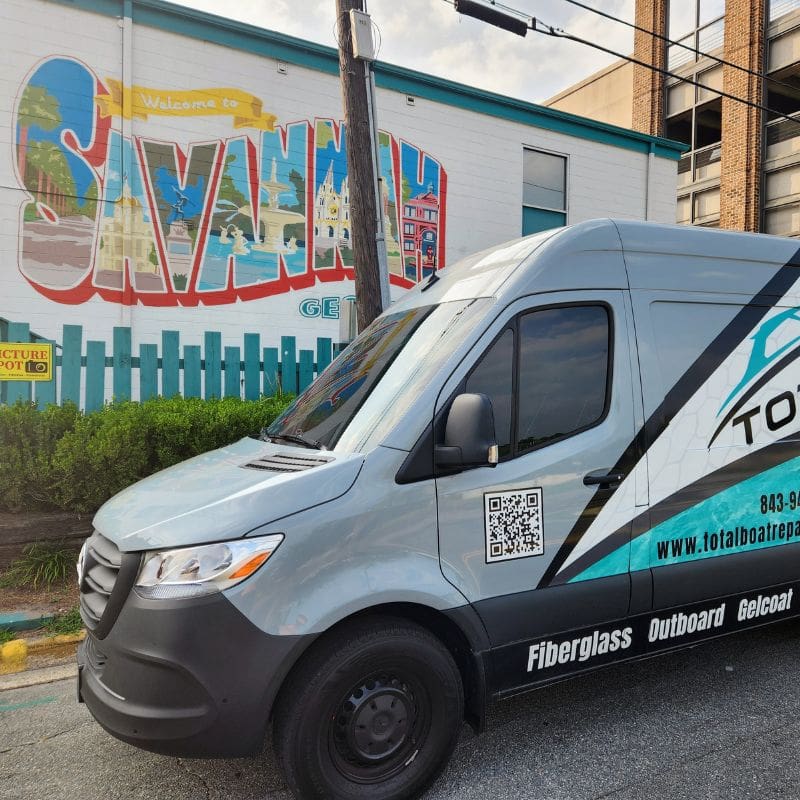
We Service These Areas Daily:
Fiberglass & Gelcoat Repair in the Greater Charleston SC Area
– Charleston (Downtown)
– Mt. Pleasant & Isle of Palms
– Johns Island & James Island
– Cooper River Boatyard
Fiberglass & Gelcoat Repair in Hilton Head Island
– Hilton Head Island
– Bluffton & Okatie
– Beaufort & Port Royal
Fiberglass & Gelcoat Repair in Savannah
– Savannah (Downtown)
– Thunderbolt & Tybee Island
– Thunderbolt Marine & Safe Harbor Savannah Yacht Center
Frequently Asked Questions
How long does a fiberglass repair take on a catamaran hull?
Most repairs will at minimum take 48 hours or more. Obviously, the larger the repair the more time it will take to complete. A simple fiberglass repair usually takes us 48-72 hours depending on weather. A keel repair or crack in the hull will routinely take 7-12 days. While a major repair may take 3 weeks or longer.
How much does a fiberglass repair cost on a catamaran hull?
It depends on a few variables, to name a few: the extent of the damage, the intricacies of the repair required, the availability of the vessel and it’s location. We provide ballpark estimates based off of pictures texted to us daily, so feel free to reach out (843) 940-1008.
Do I need to have my catamaran hauled out to do a fiberglass repair?
It depends on the location of the repair, it’s accessibility and the openness of the marina. Significant repairs done dockside take longer than those done at a boatyard, so if time is a concern it is best to do at a boatyard.
Do I need to have my catamaran hauled out to be detailed?
The best detail will always be done outside of the water as the team does not have to worry about safety, environmental factors, stability, etc. However, a good detail can still be had on the water, it is just safer and more convenient when on dry land.
Can a gelcoat repair be done dockside at my marina?
Most gelcoat repairs can be done dockside but it depends on how accessible the damage is and how large is the damage. Most marinas are not fond to medium to large repairs being done dockside.
Why is my boat hull’s paint rubbing off?
If you can rub your hand alongside the surface of your boat and notice a chalklike substance on your hand or clothes, that is your heavily oxidized gelcoat coming off. The gelcoat has degraded either to lack of maintenance or significant UV damage or both and now needs to be removed to the untouched gelcoat beneath it in order to restore the gelcoat to a glossy appearance. If you would like a free evaluation of your boat hull’s surface condition and how to restore it, feel free to reach out to us here.
What are all these small cracks on the topside of my catamaran?
Those small cracks are what we refer to as hairline cracks or spider cracks. Hairline cracks usually stem from stanchions or other hardware that have been overtightened or where there is flexing on that hardware. Spidercracks more commonly result from some form of impact, a void underneath, or the manufacturer applied to much gelcoat so it is more prone to crack. On occasion you may see small clusters of cracks that look like alligator skin, that is called crazing and must be removed to the fiberglass and redone.
Can catamaran hull cracks be repaired?
Yes. Most hull cracks can be repaired successfully once the underlying cause and full extent of damage are identified. We do not do patch work, we professionally repair the fiberglass hull to it’s original condition if not stronger than the manufacturer made it. If you wish to know more about our fiberglass repair services, click here.
How do I know if my catamaran has structural fiberglass damage?
It needs to first be evaluated by a professional. Some damage is purely aesthetic, some damage can be purely have just effected the outer fiberglass laminate while some damage may have penetrated through multiple layers or delaminated surrounding fiberglass. An in depth inspection can usually identify the extent. Click here to contact us directly for a free evaluation.
Can you repair grounding damage?
Yes. We regularly repair grounding damage, keel damage, hull fractures, and associated fiberglass damage.
Can you match my existing gelcoat color?
Yes. Professional gelcoat color matching is a core part of our repair process. However, an exact color match may be inhibited by a number of factors to include age and how well maintained was the vessel, the color of the vessel, oxidation levels, etc. Generally, the newer the vessel and the lighter the color create a more exact match than the opposite. Click here for more information on our gelcoat repair services.
Do you provide mobile service?
Yes. We perform mobile catamaran fiberglass, gelcoat, keel, hull, and restoration services throughout Charleston, Hilton Head, Bluffton, Beaufort, and Savannah. Click here to contact us directly.
How can I sell my catamaran for more money?
Outside of obvious upgrades, the thing that is most in your control is regular maintenance to the engines and operational components, maintain the integrity of the hull and lastly is to maintain the appearance of the vessel which constitutes regular details to prevent oxidation and maintain it’s high gloss rating. For a step by step guide on how to do this properly, click here for complete breakdown.