Fiberglass Boat Repair and Insurance Claims: What Every Boat Owner Needs to Know
Your boat is damaged. Now what? Here’s how to navigate the insurance claim process, avoid costly mistakes, and make sure your fiberglass repair is done right. With over 140 Google five star reviews, we have you covered.
Dealing with boat damage is stressful enough on its own. Add an insurance claim to the mix, and most boat owners quickly realize they’re navigating unfamiliar territory. Whether your vessel took a hit from a dock collision creating a crack in your fiberglass, grounded in shallow water, or sustained storm damage, the decisions you make in the first 48 hours can significantly affect both the quality of your repair and the outcome of your claim.
At Total Boat Repair in Charleston, SC, we’ve helped hundreds of boat owners through this exact process. This guide will walk you through everything you need to know—from what’s covered under a standard marine policy to why choosing the right fiberglass repair shop matters more than most people realize.
What Does Marine Insurance Actually Cover for Fiberglass Damage?
Most comprehensive marine insurance policies cover sudden and accidental physical damage to your hull and structure. In practical terms, that typically includes:
- Hull damage from impact, collision, or grounding
- Keel damage requiring structural laminate repair
- Stress cracks, fractures, or punctures in fiberglass
- Storm-related damage—floating debris, dock impact, wave stress
- Trailer or transport damage during haul-out or launch
What’s typically NOT covered:
- Normal wear and tear or age-related degradation
- Osmotic blistering or water intrusion from lack of maintenance
- Prior repairs that were done improperly
- Damage resulting from neglect or deferred maintenance
Pro tip: Review your policy’s “agreed value” vs. “actual cash value” provisions before you file. Agreed value policies pay out the insured amount without depreciation—a critical distinction when dealing with high-quality gelcoat finishes and structural repairs.
Why Fiberglass Boat Damage Is Almost Always Underestimated
This is where boat owners—and insurance adjusters who aren’t marine specialists—most commonly go wrong.
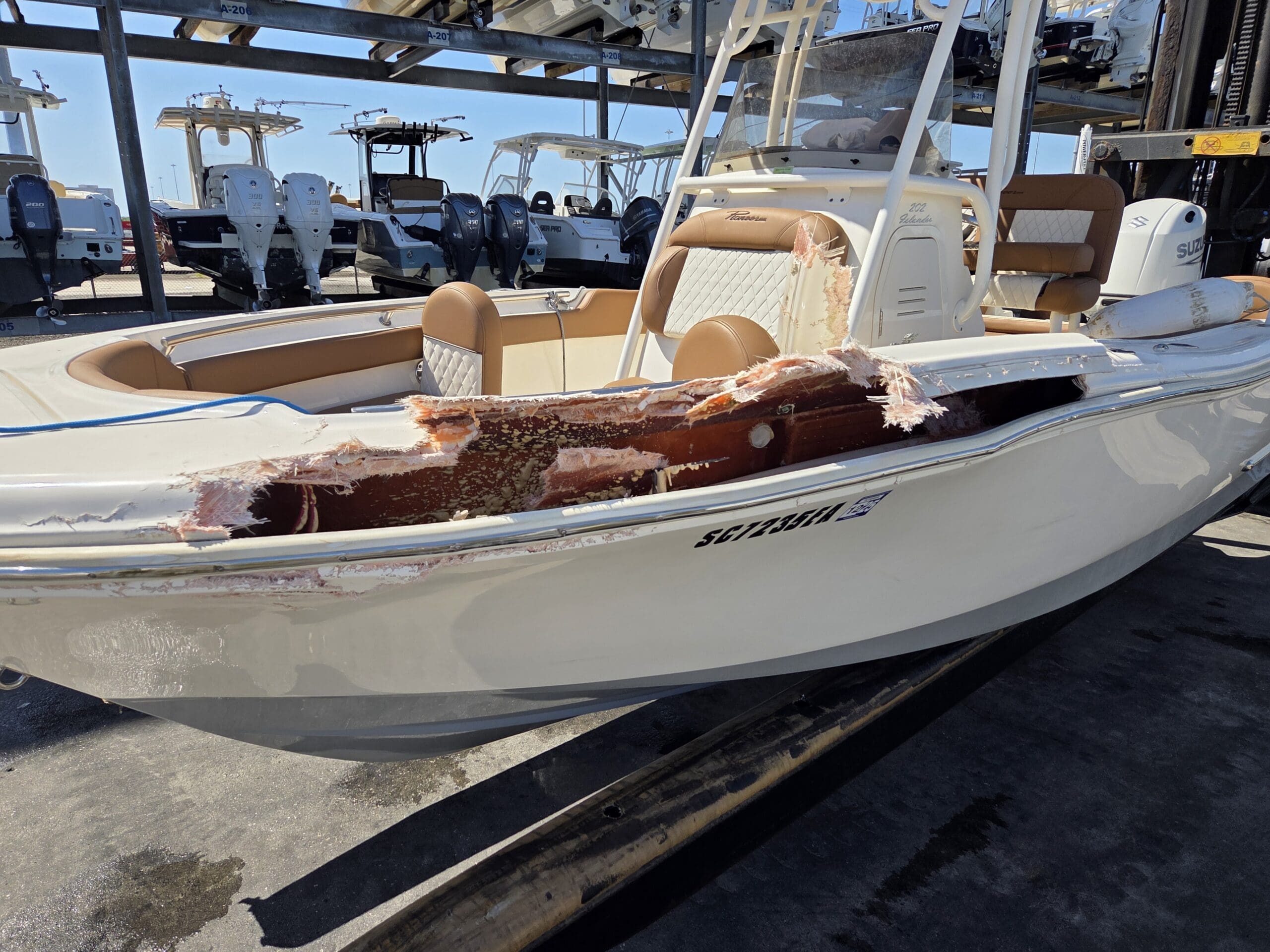
Fiberglass damage is rarely limited to what you can see on the surface. The visible crack or chip is often just the beginning. Proper structural repair requires grinding back 12 to 18 inches around the damaged area to reach sound, uncontaminated laminate—then rebuilding layer by layer using the correct marine-grade materials and resin systems.
Real-world examples of how surface damage becomes structural work:
- A 3-inch surface crack can require removal and rebuilding of an 18-inch section of hull laminate
- Keel damage from grounding often involves multiple structural layers that must be rebuilt in the correct sequence
- Gelcoat repairs require precise color-matching, UV-stable materials, and wet-sanding/polishing stages—not a spray and buff
- Impact damage near bulkheads or stringers can compromise structural support, which won’t show up in a visual inspection
When a repair is under-scoped—which happens frequently with inexperienced shops or adjusters who lack marine expertise—the results can include compromised hull integrity, visible cosmetic inconsistencies, moisture intrusion over time, and reduced resale value. A boat that’s been improperly repaired can fail a future marine survey, which makes it difficult to sell or re-insure.
How the Insurance Claim and Repair Process Should Work
At Total Boat Repair, we manage the full process from first inspection to final delivery. Here’s what that looks like:
Step 1: Thorough Damage Assessment
Before anything is filed, we perform a detailed structural and cosmetic inspection to identify the full extent of damage—not just what’s visible from the outside. This includes evaluating laminate integrity, checking for hidden delamination, and identifying any secondary damage that may have occurred. We document everything with photographs, written findings, and a clear repair methodology.
Step 2: Detailed Written Estimate
We provide a line-itemized estimate that covers labor, materials, and repair scope. This is the document that will anchor your insurance claim, so accuracy matters. Vague or incomplete estimates are the most common reason claims are underpaid or disputed.
Step 3: Direct Communication With Your Adjuster
We work directly with insurance adjusters and marine surveyors to align on repair scope, materials, and methods. If there is a discrepancy between the insurance estimate and what the repair actually requires, we advocate for the correct scope—with documentation to support it. You shouldn’t have to fight that battle alone.
Step 4: Professional Structural and Cosmetic Repair
All fiberglass repair is completed using marine-grade laminate systems, proper structural methodology, and premium gelcoat materials. We don’t cut corners on materials or skip preparation steps. Every repair is designed to restore the vessel to pre-loss condition—structurally and cosmetically.
Step 5: Final Inspection and Owner Walkthrough
Before your boat leaves our facility, we verify structural integrity, confirm color match and finish quality, and walk you through the completed repair. We want you to understand exactly what was done and feel confident in the result.
5 Insurance Claim Mistakes That Cost Boat Owners Money
1. Accepting the First Estimate Without an Independent Review
Initial insurance estimates are frequently incomplete. Adjusters who specialize in auto or property claims may not understand the labor and material requirements of marine-grade fiberglass work. Always have a qualified marine repair facility review any estimate before you accept it.
2. Choosing a Shop Based on Price Alone
The cheapest repair is almost never the best repair when it comes to fiberglass. A shop that skips proper surface preparation, uses inferior materials, or lacks experience with gelcoat color-matching will leave you with a boat that looks and performs worse than before—and may not hold up under a future marine survey.
3. Not Understanding the Full Scope of Damage Before Signing Off
Once you accept a settlement or sign off on a repair scope, it becomes very difficult to go back and request additional coverage. Make sure the estimate reflects the complete repair—including structural work, not just cosmetic restoration.
4. Delaying the Repair After Filing
Fiberglass damage that exposes the laminate to moisture begins to degrade quickly—especially in the coastal South Carolina climate. Delays allow water intrusion to worsen, which can turn a manageable repair into a major structural project. File promptly and begin repairs as soon as the claim is approved.
5. Not Documenting the Damage Yourself
Before anything is moved or cleaned up, take extensive photos and video of all visible damage from multiple angles. This documentation supports your claim and helps ensure nothing is overlooked in the assessment.
Why the Repair Shop You Choose Directly Affects Your Claim Outcome
Fiberglass repair is a specialized craft. Not every marine shop has the expertise to handle structural hull work, and not every shop knows how to communicate effectively with insurance adjusters to justify the full scope of a repair.
The right repair facility will:
- Understand marine-grade laminate systems and the correct repair methodology for each type of damage
- Provide documentation that meets insurance standards and supports the full repair scope
- Communicate proactively with adjusters and surveyors to prevent scope disputes
- Deliver consistent, high-quality results that restore both the structural integrity and appearance of your vessel
- Stand behind their work
Total Boat Repair is built around these standards. We work with boat owners throughout the Charleston area—including Mount Pleasant, Charleston, Hilton Head, Bluffton, and Savannah—and we have an established track record working alongside major marine insurers.
Frequently Asked Questions About Boat Insurance and Fiberglass Repair
How long does a fiberglass boat repair typically take?
Repair timelines vary depending on the severity and location of damage. Minor gelcoat repairs may take a few days. Structural hull repairs, keel reconstruction, or large-area laminate work can take several weeks. We provide a timeline estimate as part of the initial assessment.
Can you help me if my insurance company is disputing the repair scope?
Yes. We work directly with adjusters and marine surveyors to resolve scope disputes. We provide technical documentation, photographs, and written justification for every line item in our estimates. Most disputes are resolved through clear communication and proper documentation.
What if the damage is worse than the insurance estimate covers?
This is common, and it’s one of the main reasons you should have a professional assessment done before accepting any settlement. If additional damage is discovered during the repair, we document and communicate that immediately and work with the insurer to supplement the claim appropriately.
Do you work with all marine insurance companies?
Yes. We have experience working with the major marine insurance carriers and their adjusters. We’re familiar with the documentation requirements and standards each insurer expects, which helps move claims forward efficiently.
Will the repair match my original gelcoat color?
Gelcoat color-matching is one of the most technically demanding aspects of fiberglass repair. We use professional color-matching systems and account for UV aging and oxidation in the surrounding gel to achieve the most seamless result possible. We will not deliver a repair that is visibly inconsistent with the original finish.
Get a Professional Assessment Before You File or Settle
If your boat has been damaged, the most important thing you can do right now is get an accurate, professional evaluation before accepting any estimate or signing off on a settlement.
Once a claim is settled, reopening it is difficult. Once a repair is completed incorrectly, correcting it is expensive. The cost of a proper assessment at the start is nothing compared to the cost of getting it wrong.
Total Boat Repair serves boat owners throughout Charleston, Mount Pleasant, Charleston, Hilton Head, Bluffton, and the greater Savannah area. We handle the technical side—so you can focus on getting back on the water.